

“Indexed in” is one of the most influential statements displayed on a scholarly journal website. But researchers should distinguish between a journal's own claim and confirmation from the database concerned. Coverage can change. Titles can change. Journals can move between publishers. Different databases may also cover different periods of the same publication. For that reason, researchers should verify indexing using authoritative database records and the journal's ISSN wherever possible. A stronger scholarly information ecosystem would make these checks easier by connecting journal claims with their underlying sources and clearly showing when information was last verified.
Independent news and analysis on research and scholarly publishing — from JCF Corp.
9 November 2026Staff-reported · Editorially independent
What Does “Indexed” Really Mean on a Journal Website?
Journal websites frequently display database names and logos, but researchers should verify coverage independently.
Reported by JCF Media, the editorial arm of JCF Labs. More Journals & Indexing coverage
Beyond this story
Explore More from JCF Media
Discover perspectives, analysis and developments across scholarly publishing.
 Publishing · Analysis
The Peer Review Bottleneck: Why Editors Struggle to Find Reviewers
Researchers want timely decisions. Reviewers face overflowing requests. Editors sit between the two, trying to keep standards intact.
 Industry · Analysis
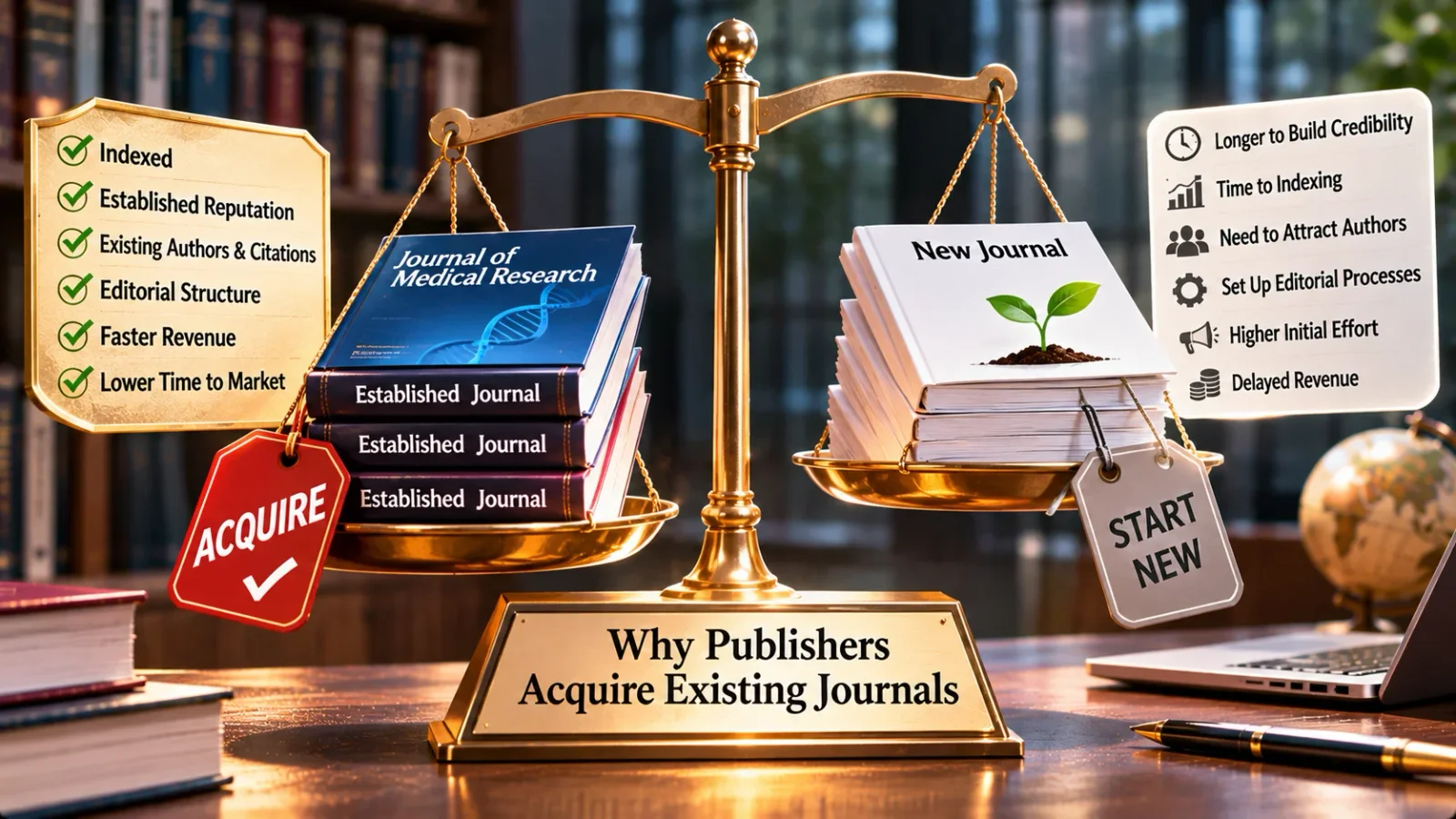
Why Publishers Buy Existing Journals Instead of Starting New Ones
An established journal offers history and a research community, but buying a title also means inheriting its unresolved problems.
 Publishing · Analysis
Diamond Open Access Sounds Free. Who Pays to Keep It Running?
When neither readers nor authors receive an invoice, a journal still needs technology, editors and long-term funding.