

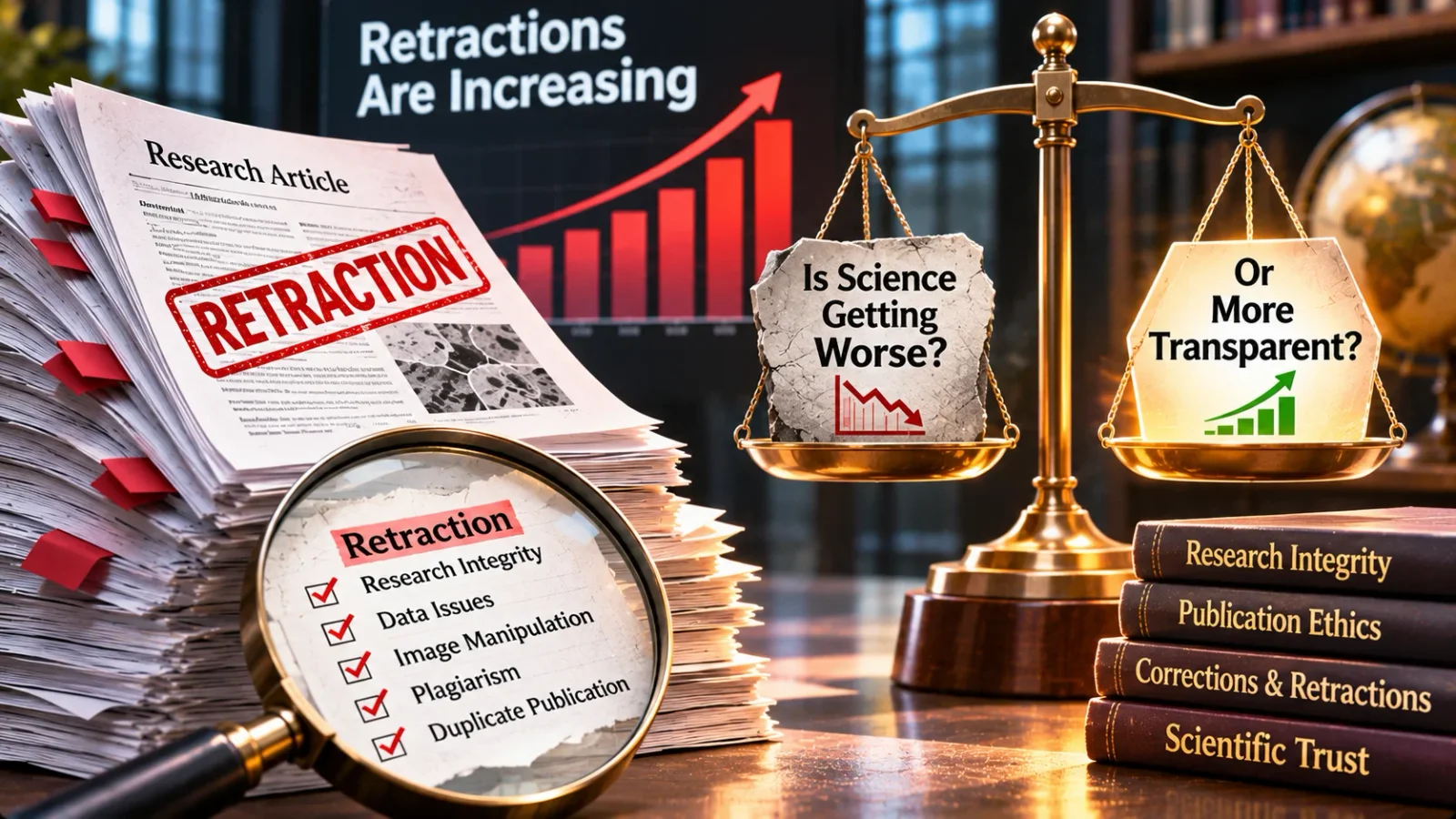
A newly retracted study may generate headlines far beyond its original readership. To some observers, the growing visibility of retractions suggests a crisis in scientific reliability. To others, it shows that publishers and researchers are getting better at finding and correcting mistakes.
Both interpretations can fit particular cases. The number of notices alone cannot tell us which explanation is correct.
What a retraction actually communicates
A retraction informs readers that a publication should no longer be relied upon in the way it was originally presented. Reasons can include unreliable findings, major errors, compromised peer review or research misconduct. Not every retraction establishes deliberate fraud.
Corrections and expressions of concern serve different purposes. A correction may repair a limited error while leaving central findings intact. An expression of concern can signal unresolved questions during an investigation.
For authors and readers, those distinctions matter more than a simple count of 'problem papers'.
Why the visible number can rise
Better screening may identify issues missed in the past. More researchers can scrutinise published figures and data. Publishers may improve their procedures for investigating allegations and communicating outcomes.
At the same time, increasing pressures on publication and the existence of paper mills can create genuine integrity risks. These explanations are not mutually exclusive. An increase in reported cases could reflect both more problems and more successful detection.
Crossref makes the Retraction Watch database available for research and states that the resource is updated with notices gathered from publisher websites. Such data are valuable, but analysis must account for coverage, reporting practices and the dates when papers were published versus retracted.
Why preserving the notice matters
Deleting a questionable PDF without explanation can leave citations pointing to a missing page and readers uncertain about what happened. A transparent notice should explain the nature of the problem, be linked to the original article and remain discoverable.
Crossmark is one tool that helps readers find changes to a scholarly record, including corrections and retractions. Accurate metadata and persistent identifiers are important because copies of an article may continue to circulate long after the journal has changed its website.
What a good notice tells the reader
A usable correction or retraction notice should identify the affected article, explain the nature of the change without unsupported accusations and state whether the principal findings remain reliable. It should link both ways: from the original article to the notice, and from the notice back to the record.
When an investigation is unresolved, editors should avoid suggesting that an allegation has already been proved. When a correction is sufficient, a journal should not use a retraction simply because the story attracts attention. The integrity of the record depends on proportionate decisions and clear explanations.
The wrong lesson for publishers
A journal that issues corrections is not necessarily less trustworthy than one with none. It may be more willing to acknowledge errors. What matters is whether concerns are assessed fairly, notices are clear and the process is timely and proportionate.
Likewise, an institution should not infer that every author associated with a retracted paper engaged in misconduct. Investigations may distinguish methodological errors, responsibility among contributors and questions that remain unresolved.
How to read the trend responsibly
Compare similar publication periods and disciplines. Separate retractions from corrections and expressions of concern. Examine reasons, time from publication to notice and whether changes in database coverage affect the numbers.
Counting notices also calls for attention to geography and language. A database may have better coverage of journals in some regions or disciplines than others, which can make simple international league tables misleading.
Retractions are an uncomfortable but necessary part of a system that revises knowledge in light of evidence. They should trigger scrutiny, not automatic conclusions that science is either collapsing or correcting itself perfectly.