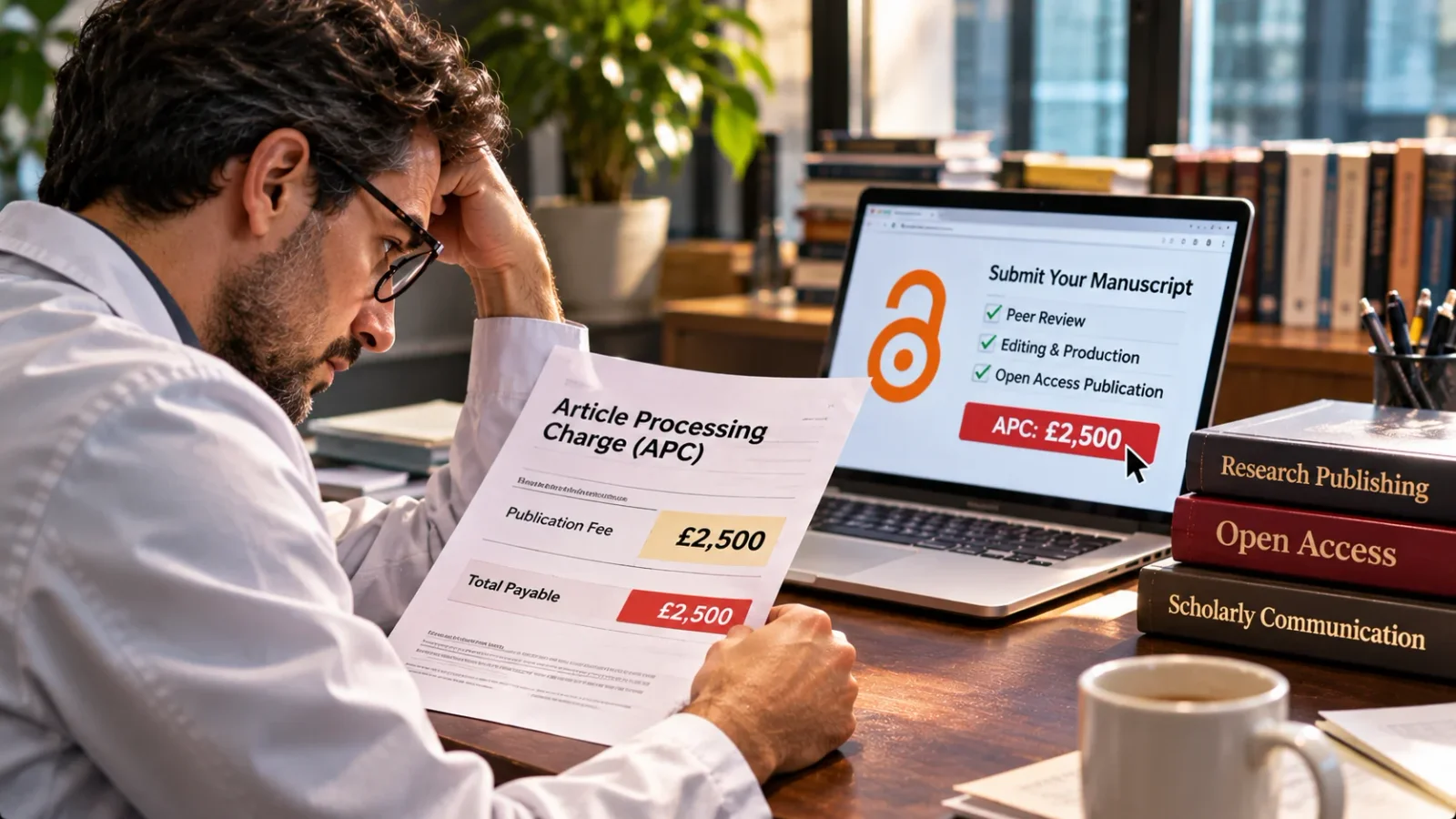

An author receives an acceptance email and then an invoice: $1,500 to publish an article that has already taken months to research and revise. The immediate reaction is understandable. What, exactly, is that payment buying?
There is no single answer across open-access publishing. Some journals charge substantial article processing charges, commonly called APCs. Others have lower fees, institutional agreements or no author-facing charge at all. The services included, and the costs of delivering them, vary widely.
The useful question is not whether every APC is justified or every fee is excessive. It is whether the journal provides clear information about its price, the work behind it and the protections separating editorial decisions from payment.
One invoice, several kinds of work
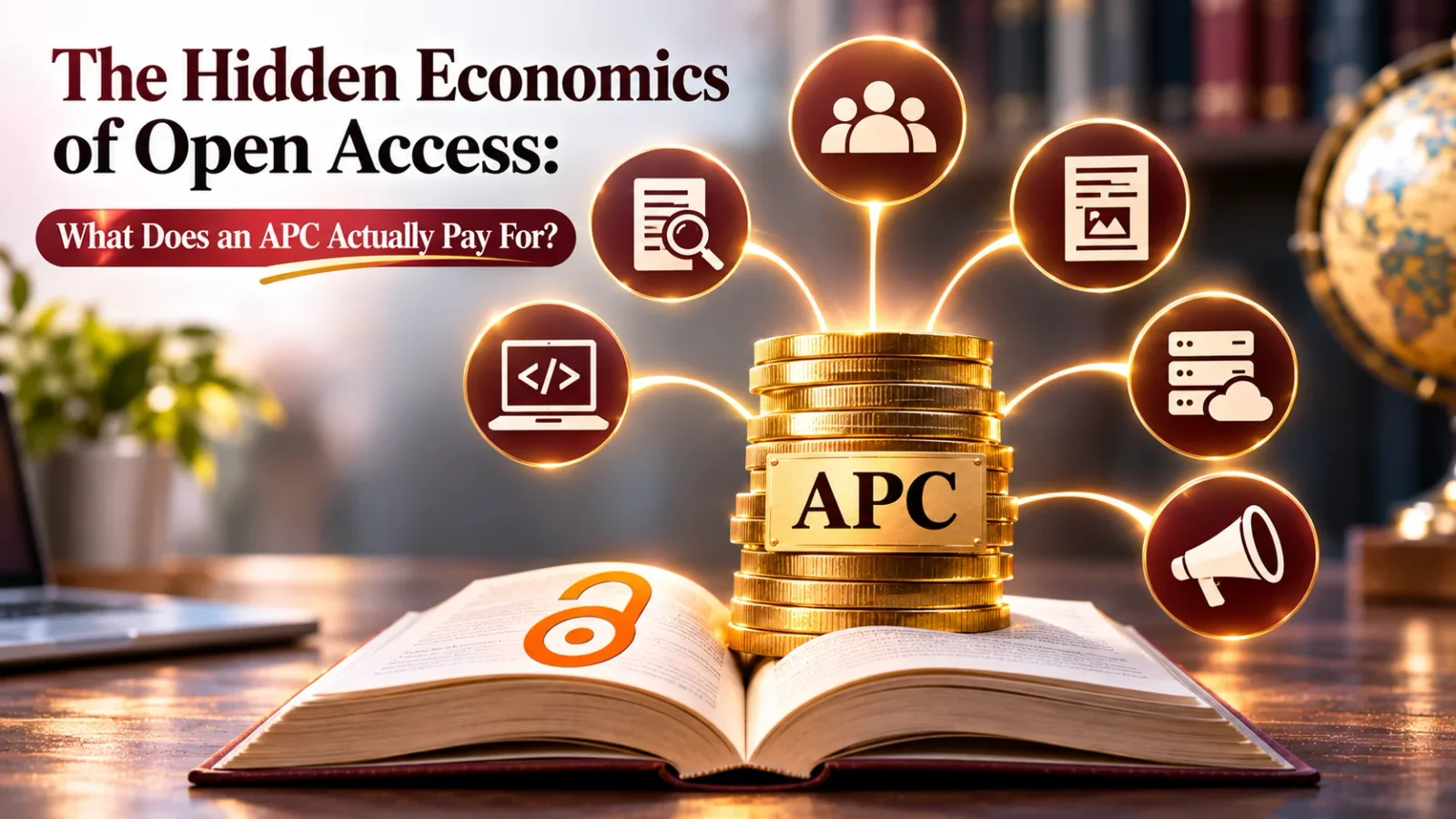
Publishing a paper involves more than uploading a PDF. A functioning journal needs administrative checks, plagiarism and integrity screening, editor assignment, reviewer coordination, decisions and appeals, accepted-manuscript production, metadata, hosting and long-term record maintenance.
Some steps involve paid professionals; others involve academic volunteers or staff whose salaries are funded by universities. These distinctions matter when comparing the apparent cost of different journals. A society title supported by volunteer editors may appear cheaper to run than a journal that pays for a full service team, even though both depend on real labour.
After acceptance, a manuscript may need copyediting, reference checks, accessible formats, XML conversion, DOI registration, license information, archiving and distribution. Corrections and retractions, when necessary, can create obligations long after the original payment.
A fee may cover all of those activities, only some of them or a broader bundle of platform and administrative costs. The publisher should explain its model rather than allowing readers to guess.
Why prices differ so much
A high-volume journal may spread fixed technology and staffing costs across many articles. A small specialist title may carry similar platform and governance expenses while publishing far fewer papers. Some journals invest heavily in developmental editing or specialist data checks; others deliberately offer a narrower service.
Brand reputation and demand can also influence pricing. An APC is a market price, not simply an invoice for the exact number of staff minutes spent on one accepted paper. Authors should not assume that a larger fee guarantees better peer review or that a smaller fee indicates weak quality.
Pricing can also be affected by agreements negotiated by universities and funders. An author may see a nominal list price but pay nothing personally because their institution covers it. Another researcher at a less well-funded institution may face the same list price without that support.
Who pays when the author does not?
Fees may be paid from research grants, departmental accounts, central university funds, institutional publishing agreements or the author's own resources. Some publishers provide waivers or discounts for eligible researchers, although the conditions are not universal.
There are also journals where neither readers nor authors pay at the point of use. UNESCO describes diamond open access as a model supported by shared infrastructure and public-interest arrangements without author or reader fees. Such journals still have costs; the funding comes through other channels.
This distinction is vital. 'Open access' describes availability and reuse conditions, not a single billing method. An open article may be financed by an APC, a library consortium, a society, a government programme or a university press.
The conflict an APC creates—and how to manage it
Under an APC model, accepting more fee-paying articles can increase revenue. That creates a potential commercial incentive that must be kept separate from editorial evaluation. It does not mean every APC journal makes compromised decisions, but the governance problem is real.
Editors need authority to reject submissions for scientific reasons without commercial interference. Journals should publish review criteria, declare conflicts of interest and show how complaints or appeals are handled. The principles of transparency supported by COPE, DOAJ, OASPA and WAME require author fees and waivers to be clearly disclosed and not to determine editorial decisions.
Readers cannot assess the integrity of an editorial process from an APC price alone. They can, however, look for evidence that the journal follows its stated policies.
A simple cost illustration
Suppose a journal publishes 100 articles a year and charges an average of $900 on 75 of them, with the remainder covered by waivers or other arrangements. Gross APC receipts would be $67,500, not $90,000.
If annual paid staff, platform, production, preservation and overhead expenses total $60,000, little remains before taxes or unforeseen costs. If those expenses are $30,000, the economics are different. These are illustrative figures, not industry benchmarks.
The calculation reveals why comparisons based on multiplying a public APC by total annual articles can be misleading. Not all published articles necessarily generate a full fee, and the underlying cost structure is rarely visible from the journal homepage.
What an author should check before submitting
Find the actual fee schedule rather than a promotional headline. Ask whether taxes, card charges, page fees, colour charges or other services are additional. Check when payment becomes due, whether fees are refundable, whether waivers must be requested before submission and which license will apply.
Look beyond price. Are the editor-in-chief and editorial board identifiable? Is the peer-review method stated? Are articles assigned valid identifiers and preserved? Does the journal explain how it corrects the record? Does it give realistic decision timelines without promising acceptance?
An author should also check funder requirements: a paid open-access article may still fail an institution's licensing or repository rules if the selected license or deposit arrangement is unsuitable.
The question the industry should answer better
Publishers do not need to disclose every supplier invoice to every prospective author. But clearer pricing explanations, credible waiver policies and honest descriptions of editorial services would improve trust.
The cheapest journal is not automatically the best value, and the most expensive journal is not automatically the most rigorous. Value comes from the quality and reliability of the publishing service, the contribution it makes to discoverability and preservation, and the independence of editorial judgment.
The APC debate becomes more useful when it moves beyond arguing over a single number and starts asking what kind of publishing system the fee supports.